China has long been a global manufacturing powerhouse and a central node in international trade. As the world’s second‑largest economy and the largest exporter, China’s shipping routes are critical to global supply chains. From electronics to textiles, a wide range of goods are transported across the world through China’s bustling ports.
For businesses looking to ship goods from China, choosing the right shipping route is crucial. It impacts not only cost but also delivery time and reliability of your shipments. In this article, we will explore the most important shipping routes from China, their associated challenges, and key factors to consider when selecting the best route for your needs.
Top Shipping Ports in China
China is home to some of the largest and busiest ports globally. Here are some of the top ports to consider when shipping from China:
- Port of Shanghai
- The Port of Shanghai is the largest container port in the world, handling tens of millions of TEUs annually. Global Trade Magazine
- It serves as a major hub for international trade, linking China to ports in the U.S., Europe, and Southeast Asia. Tonlexing
- Located on the East China Sea, Shanghai is a critical gateway for both exports and imports.
- According to Government of China, it boasts nearly 350 international shipping routes reaching more than 700 ports in over 200 countries and regions.
- Port of Shenzhen
- Located in southern China, the Port of Shenzhen is strategically placed near Hong Kong, making it a key port for exports to the U.S., Europe, and Southeast Asia. Container Xchange
- It is well known for its advanced facilities and high efficiency in handling large volumes of container traffic.
- Port of Ningbo-Zhoushan
- As China’s second-largest port by some metrics, this port is a key logistics hub for global shipping, particularly for routes to Europe and the Americas. DCSA
- It has strong connections and handles large numbers of container volumes.
- Port of Guangzhou
- A major maritime gateway in southern China, serving as a bridge for trade between China and global markets.
- It’s strategically located near Hong Kong and Macau, facilitating access via the South China Sea.
These ports are not only major export hubs but also critical when considering the choice of shipping route.
Types of Shipping Routes from China
Shipping from China can be done via different modes, each catering to specific needs based on cost, speed, and volume. Here are the primary types of shipping routes from China:
- Ocean Freight
- Ocean freight remains the most common and cost-effective way to ship goods from China to other continents.
- Major ocean routes connect China to ports in the U.S., Europe, Southeast Asia, and Africa. For example, shipments from the Port of Shanghai cover hundreds of destinations worldwide. Container Xchange
- Ideal for large volumes of goods where transit time is less of a constraint.
- Air Freight
- Air freight offers the fastest transit times but at a significantly higher cost.
- Often used for time-sensitive or high-value goods such as electronics, pharmaceuticals, and perishables.
- Rail Freight
- Rail freight is gaining popularity, especially for shipments from China to Europe, via rail corridors that serve as an alternative to ocean freight.
- For example, the development of routes under the Belt and Road Initiative and other logistics corridors is enabling more inland and cross-continental rail connections.
- Road and Trucking
- Road transport is important for inland movements within China and for connecting to ports or rail terminals.
- It often serves as the “first mile” or “last mile” link rather than the main long-haul route internationally.
Major Shipping Routes and Their Trade Partners
China’s shipping routes connect to major global trade partners. A breakdown of key routes:
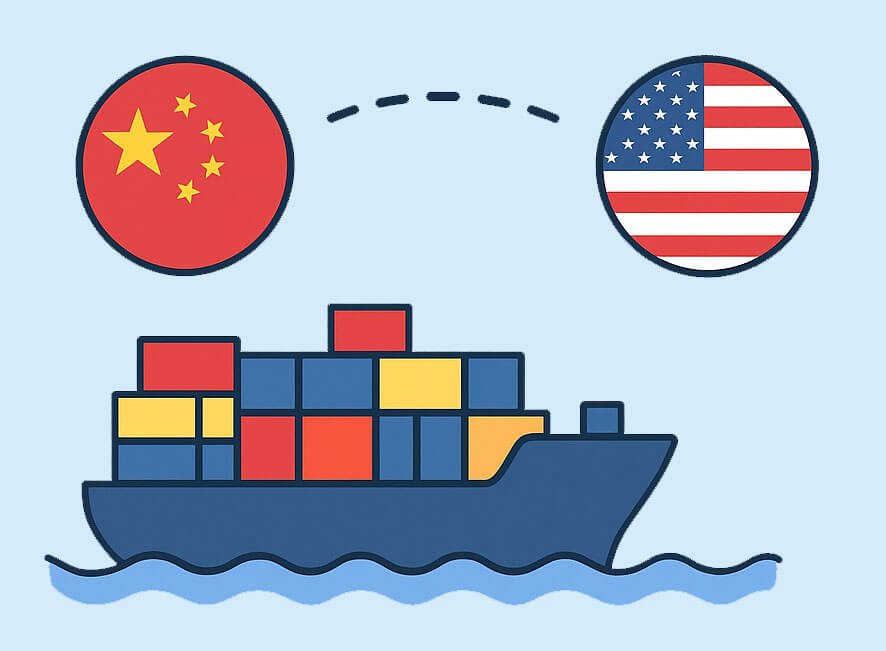
- China to the U.S.
- The most well-known route is from China to the U.S., especially along the Pacific Ocean. Major U.S. ports like Los Angeles and Long Beach are connected to China through this vital lane.
- Many consumer goods, electronics, textiles, and machinery move along this route.
- China to Europe
- Shipping routes from China to Europe typically cross the Indian Ocean, the Suez Canal, and then into European ports. Rail routes are also increasingly used for central/eastern Europe delivery.
- The sea-route infrastructure and connectivity of Chinese ports support this. Container Xchange
- China to Southeast Asia
- Geography gives China a strong trade linkage to neighboring Southeast Asian countries (Singapore, Malaysia, Vietnam).
- These regional routes are especially important for electronics, textiles, and component exports.
- China to Africa
- Trade between China and Africa has grown with shipping routes connecting China to South Africa, Egypt, and other African ports.
- These routes support exports of Chinese goods and imports of raw materials from Africa. The network expansion is also part of the broader global logistics strategy of China. English CKGSB
Factors Influencing Shipping Routes
Several factors influence the choice of shipping route:
- Weather Conditions & Seasons
Seasonal storms, typhoons, monsoons, and other weather events can delay transit or force rerouting. - Geopolitical Factors & Trade Agreements
Political stability, tariffs, trade sanctions, and regional agreements affect availability and cost of routes. For example, China has invested in overseas ports and logistic corridors as part of its global strategy. CFR - Economic Shifts
As demand changes and new manufacturing hubs emerge, route preferences shift. China’s dominance in shipping infrastructure and logistics is notable: around 95% of its international trade is conducted through sea-lanes. English CKGSB - Infrastructure & Connectivity
The efficiency of ports, the availability of deep-water berths, transshipment hubs, and rail/road connections all influence how effective a route is. For example, Shanghai’s port infrastructure supports a massive number of routes and high throughput. Government of China - Cost vs Time vs Sustainability
Different modes (sea vs. air vs. rail) offer trade-offs between cost, speed, and environmental impact. More companies are adding environmental concerns into their logistics decisions.
Choosing the Right Shipping Route
Selecting the right shipping route is a strategic decision based on several factors:
- Cost Considerations
- Ocean freight is typically the most economical option for large shipments.
- Air freight is expensive but fast; useful for time-critical or high-value goods.
- Rail is often a middle ground for cost and speed between sea and air.
- Transit Time
- If you need fast delivery, air freight wins.
- For standard goods, ocean freight is acceptable though slower (weeks rather than days).
- For China-to-Europe, rail is sometimes faster than sea and cheaper than air.
- Safety and Reliability
- Avoiding regions with piracy risk or political instability is important.
- Working with experienced freight forwarders and choosing reliable routes/ports reduces risk.
- Environmental Concerns
- Many companies are looking to reduce their carbon footprint via greener shipping methods: e.g., choosing ports with better environmental practices, using rail where feasible, or opting for cleaner fuel ships.
- For instance, the Port of Shanghai is developing green shipping corridors. Government of China
Challenges and Solutions in Shipping from China
Despite the efficiency of China’s ports and infrastructure, there are several challenges to navigate:
- Port Congestion
- Major ports like Shanghai and Shenzhen can become congested, especially in peak seasons.
- Solutions: plan ahead, choose alternative ports, coordinate with forwarders.
- Customs Regulations and Documentation
- Every destination country has its own import regulations, tariffs, and customs processes. Delay often comes from missing/incomplete documentation.
- Working with freight specialists or customs brokers can ease this.
- Global Disruptions
- Events such as pandemics, trade wars, or logistic bottlenecks (e.g., canal closures) can affect routes and cost/time. Research and risk-planning are wise. For example, during COVID-19 maritime trade was significantly impacted. Arxiv
Future Trends in Shipping Routes from China
- Belt and Road & New Corridors
- China’s “Belt & Road Initiative” (BRI) is creating new shipping routes and logistics corridors, especially rail and multi-modal links to Europe and Africa. Wikipedia
- Smart & Automated Ports
- Ports are evolving with automation, digital logistics, and better infrastructure. For instance, Shanghai’s push toward intelligent terminals is documented. English Shanghai Government
- Sustainability & Green Shipping
- Environmental regulation, customer expectations, and corporate sustainability goals are driving greener shipping practices.
Conclusion
Shipping routes from China are essential to global trade. Understanding the factors that influence route selection helps businesses optimize their logistics strategy. Whether you’re shipping by sea, air, or rail, choosing the right route will ensure timely deliveries, cost-efficiency, and smoother operations. Working with experienced logistics providers who understand China’s ports and global shipping infrastructure is highly recommended.
Are you ready to optimize your shipping strategy? Let’s explore the best options for your business today.